
Plaster vs Pebble vs Quartz: What Actually Makes Sense for Your Pool?
Most homeowners do not think about pool finishes until they have to.
Usually it starts when the surface begins to feel a little worn. The pool still holds water, still gets used, still looks fine from far away. But once you are in it, you start noticing things. A bit of roughness on the bottom. Some fading in the color. Maybe stains that never really go away anymore.
Then the question comes up.
If I redo my pool, what finish should I actually choose?
In Los Angeles, most people end up choosing between three main options. Plaster, pebble, or quartz. They all look good in photos, but they feel and perform very differently once they are in your backyard.
So let’s break them down in a way that actually helps you decide, not overwhelm you.
Plaster is the classic starting point
Plaster is the finish most people recognize first. It has been used for a long time, and for good reason. It gives the pool a clean, simple look and works well for homeowners who want something straightforward.
When it is new, plaster feels smooth and looks bright. The water has that classic blue pool look that a lot of people are used to seeing.
It is often the most budget friendly option, which is why many homeowners lean toward it when they just want the pool refreshed without changing the entire style.
But plaster does have a personality of its own over time.
It can slowly start to show wear sooner than other finishes. You may notice fading, light staining, or a slightly rougher feel after years of use. That does not mean it is a bad choice. It just means it is more traditional and a little more sensitive to long term wear.
Plaster tends to make sense when:
- You want a clean and simple look
- You are keeping the pool mostly as it is
- You are focused on budget
- You want a familiar finish that feels classic
For many homeowners starting with Pool Resurfacing in Los Angeles, plaster is often the first option they consider.
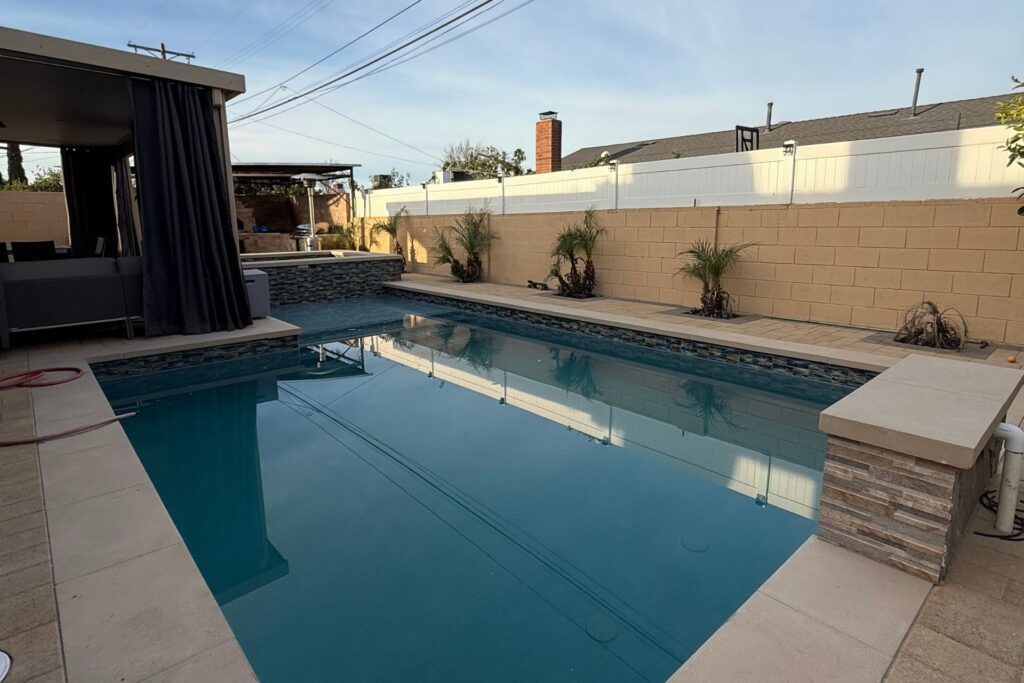
Pebble finishes feel more natural and textured
Pebble finishes are where things start to feel a bit more upgraded.
Instead of a smooth plaster surface, pebble uses small stones mixed into the finish. Once it is installed, the surface has a more natural texture and a slightly more organic look.
A lot of Los Angeles homeowners like pebble because of how the water looks with it. The color often feels deeper and richer compared to plaster. It can give the pool a more resort style feel without changing the entire shape or layout.
It also tends to hold up longer than traditional plaster in many cases. The added texture can make the surface feel more durable over time.
That said, pebble does have a different feel underfoot. Some people love it. Some people prefer something smoother. It really comes down to comfort preference and how often the pool is used.
Pebble usually makes sense when:
You want a more custom or natural look
You like deeper water color
You want something more durable than basic plaster
You are okay with a slightly textured surface
This is where Pool Plastering and Finishes in Los Angeles becomes more of a design conversation than just a repair.
Quartz finishes sit in the middle
Quartz finishes are kind of the balance point between plaster and pebble.
They still give you a smooth feel like plaster, but they are strengthened with quartz crystals mixed into the surface. This helps improve durability and gives the finish a more polished look.
Visually, quartz can feel a bit more refined than standard plaster. It has a subtle sparkle in certain lighting and can help the pool feel more upgraded without going fully textured like pebble.
A lot of homeowners like quartz when they want something that feels a step above basic plaster but still want a smooth surface underfoot.
Quartz usually makes sense when:
You want something smoother than pebble
You want better durability than plaster
You want a slightly upgraded look without going too bold
You want a balanced middle option
For many projects, quartz ends up being the “this feels just right” choice once people see samples in person.
So how do you actually choose?
This is where most homeowners get stuck, because all three options can look good depending on the situation.
Here is a simpler way to think about it.
If you want something clean, simple, and budget friendly, plaster usually makes sense.
If you want a more natural, upgraded, long lasting feel, pebble is usually the direction.
If you want a balanced option that feels smoother but still more durable than plaster, quartz often lands in the middle.
But the truth is, the pool itself matters just as much as the finish.
Sun exposure in Los Angeles, backyard style, tile choice, coping, decking, and even surrounding landscaping all affect how the finish will actually look once it is installed.
A finish that looks perfect in one backyard might feel completely different in another.
That is why homeowners usually end up choosing after seeing real samples in person, not just photos online.
How lighting and water change everything
One thing people do not always realize is how much water and sunlight change the appearance of a finish.
A plaster pool can look bright and clean in direct sun but feel softer in shaded areas. Pebble can look deep and dramatic during the day but more subtle in the evening. Quartz can shift slightly depending on lighting and water movement.
Los Angeles pools deal with a lot of sunlight throughout the year, which means the finish is almost always interacting with light in some way.
This is why two pools with the same finish can still look different.
It is not just about the material. It is about the environment around it.
What most homeowners end up forgetting
When people focus only on the finish, they sometimes forget the surrounding details.
But the tile, coping, and deck all play a role in how the final pool looks.
For example:
A modern pebble finish with outdated tile can feel mismatched
A clean plaster finish with cracked coping can feel unfinished
A quartz finish next to a worn deck can feel incomplete
This is why finishes should not be chosen in isolation. They work best when they match the rest of the pool design.
That is also where services like Pool Tile and Coping in Los Angeles and Pool Decking in Los Angeles quietly become part of the bigger decision.
Maintenance is part of the decision too
Different finishes also behave differently over time.
Plaster usually needs more attention as it ages. Pebble tends to be more resistant to wear. Quartz sits in between depending on the specific mix and installation quality.
But no matter which finish you choose, maintenance still matters.
Water balance, cleaning habits, and overall care will always affect how long the surface stays in good condition.
The CDC explains basic pool water safety and maintenance principles, including the importance of keeping proper chemical balance for swimmer safety and surface protection. You can read more here.
A good finish helps the pool look better. Good maintenance helps it stay that way.
Cost differences without overcomplicating it
Most homeowners want a simple answer here, but it really depends on the pool.
In general:
Plaster is usually the most affordable starting point
Quartz is typically mid range
Pebble is often the higher end option
But cost is not only about the material. Prep work, repairs, pool size, access, and additional updates like tile or coping can all affect the final number.
That is why a real inspection matters more than guessing from online ranges.
When homeowners start leaning toward one option
In real projects, decisions usually happen like this:
Someone walks in wanting plaster, then sees pebble samples and starts thinking about upgrading.
Someone considers pebble, but decides quartz feels more comfortable underfoot.
Someone compares everything and ends up choosing plaster because the rest of the backyard does not need anything fancy.
There is no wrong choice. It is really about what feels right for your pool, your home, and how you plan to use the space.
How Triton Pools and Spas helps with this decision
Most homeowners do not need a sales pitch. They just need someone to look at the pool and explain things clearly.
At Triton Pools and Spas, the goal is simple. Look at the condition of the pool, understand what is worn out, and help you compare finishes in a way that actually makes sense in your backyard.
Some pools only need resurfacing. Some need tile or coping updated at the same time. Some need a bigger remodel conversation.
The point is to match the finish to the pool, not force the pool to fit the finish.
You can explore more about Pool Resurfacing in Los Angeles, Pool Plastering and Finishes, Pool Tile and Coping, Pool Decking, and Pool Remodeling when you are ready.
Frequently Asked Questions About Pool Resurfacing
Pebble and quartz finishes usually last longer than traditional plaster, but actual lifespan depends on water care, installation quality, and maintenance.
Yes. Plaster is still widely used and works well for homeowners who want a clean, simple, and more budget friendly option.
Pebble has more texture than plaster or quartz, but many homeowners get used to it quickly. It depends on personal comfort preference.
Yes. When a pool is resurfaced, you can usually switch between plaster, pebble, and quartz depending on what you want.
There is no single best finish. Each one looks different depending on lighting, water depth, tile, coping, and backyard design.
Ready to choose the right finish for your pool?
If your pool is starting to look worn or you are just ready for a change, the finish you choose will make a big difference in how the backyard feels.
Triton Pools and Spas can walk you through plaster, pebble, and quartz options and help you choose what actually fits your pool and your home.
Reach out anytime to schedule a pool finish consultation in Los Angeles.