
Pool Tile and Coping Replacement in Los Angeles: When Is It Time?
Most people do not really think about their pool tile or coping until something starts to look a little off.
It is never usually one big moment. It is more like small things you start noticing over time. A tile that looks a little cracked when the light hits it just right. A faded waterline that never quite comes clean anymore. A piece of coping that feels a bit loose when you sit near the edge.
At first, you ignore it. The pool still works. The water still looks fine. Everything still functions the way it should.
But visually, something is changing.
And that is usually when homeowners start asking the same question without even realizing it.
Do I need to replace this, or can I just leave it for now?
If you are at that point, you are already closer to needing attention than you might think.
Why tile and coping matter more than they get credit for
Tile and coping are easy to overlook because they are not the main part of the pool.
But they are the details that actually frame everything.
Tile sits right at eye level when you look at the water. Coping is the edge you touch every time you get in or out. When both are in good shape, the pool just feels finished. You do not even think about them.
But when they start to wear out, you notice.
The whole pool can look older even if the surface is still fine.
In Los Angeles especially, where pools get a lot of sun and year round use, these areas tend to age faster than people expect.
That is why Pool Tile and Coping in Los Angeles becomes a common upgrade once homeowners start paying attention to details.
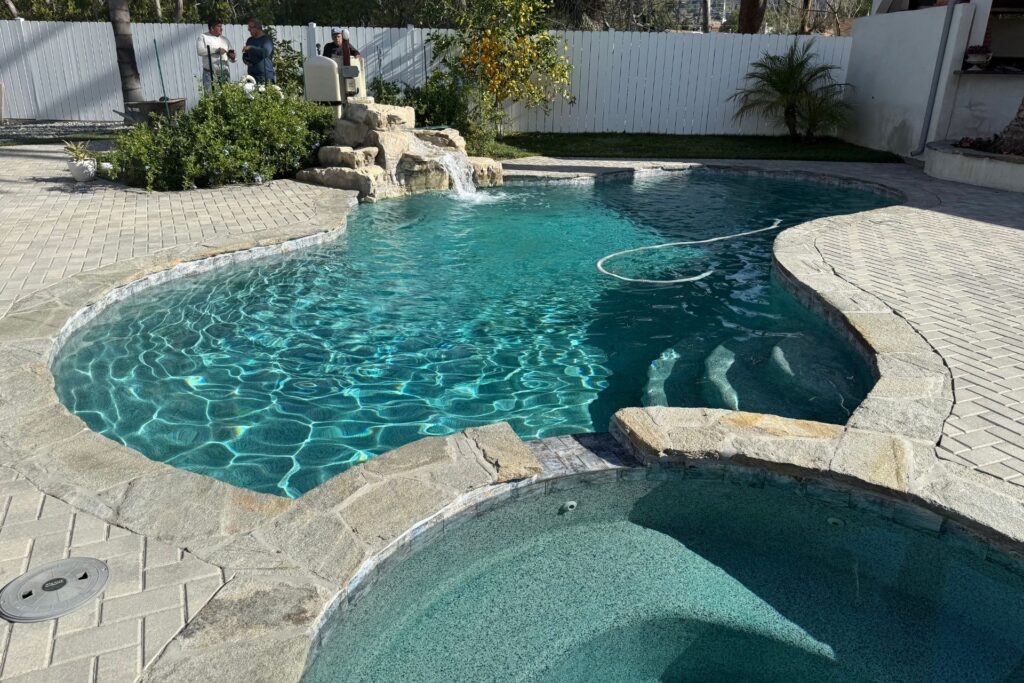
The small signs tile is starting to fail
Tile usually does not break all at once. It gives you little warnings first.
You might notice:
- A few cracked tiles along the waterline
- Spots that always look dirty no matter how much you clean
- Grout that is starting to disappear in places
- Tiles that feel loose if you tap them
- Fading that makes the color look uneven
- A style that just feels outdated compared to the rest of the home
One or two of these might not feel urgent. That is normal. But when you start seeing it in multiple areas, it usually means the tile is reaching the end of its life.
At that point, patching things here and there often does not really solve the bigger issue.
What coping problems actually look like
Coping tends to fail more quietly at first.
You do not always notice it right away until you are close to it.
Maybe you sit on the edge and feel a small shift. Maybe you see a crack forming along the top. Maybe the edge does not feel as solid as it used to.
Common signs include:
Cracking along the edge
Loose or shifting sections
Gaps forming between pool and deck
Rough or sharp edges that did not used to be there
Areas that look uneven or sunken
When coping starts moving, it is usually more than just cosmetic. It can affect how safe and comfortable the pool feels to use.
Why waiting usually makes it worse
A lot of homeowners delay this kind of work because the pool still functions.
And that makes sense. If you can still swim, it feels like it can wait.
But tile and coping issues do not usually stay the same. They slowly spread. A loose tile can turn into a gap. A small crack can turn into a wider break. Water can start getting into places it should not be.
And once that happens, the repair becomes bigger than just replacing a few pieces.
This is one of those situations where early attention is usually easier than waiting until things get worse.
Repair or full replacement
Not every situation needs full replacement.
Sometimes a small section can be repaired and everything else is fine. Other times, the damage is spread out enough that patching it does not really make sense anymore.
Replacement usually becomes the better option when:
Damage is showing in multiple areas
The materials are old or hard to match
Repairs are becoming a regular thing
The pool is already being resurfaced or updated
If you are already thinking about Pool Resurfacing in Los Angeles, it often makes sense to look at tile and coping at the same time so everything feels consistent when the project is done.
How tile and coping change the whole look of the pool
This is something homeowners usually do not fully expect until they see it done.
You can resurface a pool and it will look better. But if the tile is still old, the contrast is obvious.
On the other hand, when you update tile and coping along with the surface, the entire pool feels different. Not just cleaner, but actually newer.
It is one of those upgrades where the change is immediate. You do not have to explain it to anyone. People see it right away.
Choosing materials is not just about looks
Most people think tile and coping choices are just about style, but there is more to it than that.
In Los Angeles, for example, heat matters a lot. Some coping materials get very hot under the sun. Others stay more comfortable to walk on or sit near.
So homeowners usually end up balancing a few things:
How it looks
How it feels underfoot
How it handles sun exposure
How well it matches the rest of the backyard
How long it is expected to last
The right choice is not just what looks good in a photo. It is what actually makes sense for your yard and how you use the pool.
How this fits into the bigger pool picture
Tile and coping are rarely isolated decisions.
They usually show up while you are already thinking about resurfacing or remodeling. Maybe the surface is worn too. Maybe the deck needs attention. Maybe the pool just feels outdated overall.
That is where Pool Remodeling in Los Angeles starts coming into the conversation, even if you originally only called about tile.
It is not about doing more work. It is about not fixing one part of the pool while ignoring the parts that make it look unfinished.
What happens if you leave it alone too long
If tile or coping damage is ignored for a long time, the issues usually do not stay surface level.
Water can start getting behind tiles. Coping can shift further. Gaps can form that affect the surrounding structure. And eventually, what started as a visual issue can turn into a repair that involves more than just cosmetic work.
That is why catching it early usually gives you more options.
Maintenance still plays a role
Even new tile and coping will last longer if the pool is cared for properly.
Water balance, cleaning habits, and general upkeep all affect how materials age over time.
The CDC has general guidance on pool water care and safe swimming practices, including why chemical balance matters for both safety and surface protection.
Good maintenance will not prevent aging completely, but it definitely helps slow it down.
Do you need permits for this kind of work
Most simple tile and coping replacements do not involve complicated permitting on their own.
But if they are part of a larger remodel that includes plumbing changes, structural work, or equipment updates, permits may come into play.
The Los Angeles Department of Building and Safety provides general information here.
A contractor should always clarify this before starting so you are not surprised later.
How Triton Pools and Spas helps with this decision
Most homeowners are not trying to overthink this. They just want to know what is actually wrong and what needs to be done now versus later.
That is really what this comes down to.
We look at the pool as a whole. Tile, coping, surface, decking, and structure. Then we help you figure out what actually needs attention and what can wait.
Sometimes it is a small repair. Sometimes it is a full replacement. Sometimes it connects into a larger resurfacing or remodeling project.
The goal is not to push extra work. The goal is to help you avoid doing things twice.
You can explore more about Pool Tile and Coping in Los Angeles, Pool Resurfacing in Los Angeles, Pool Decking in Los Angeles, and Pool Remodeling in Los Angeles whenever you are ready.
Frequently Asked Questions About Pool Resurfacing
If you see cracks, fading, loose tiles, or stains that do not clean off, it may be time to consider replacement.
Small areas can sometimes be repaired, but widespread wear usually means replacement makes more sense.
Often yes, especially if they are already showing wear. It helps everything feel consistent when finished.
It depends on materials, water care, sun exposure, and usage, but all tile eventually shows aging over time.
Age, water exposure, and temperature changes are some of the most common reasons coping starts to shift or crack.
Ready to take a closer look at your pool
If your tile or coping is starting to look worn, cracked, or just not quite right anymore, it is usually better to address it sooner rather than later.
Triton Pools and Spas can take a look, explain what is happening, and help you decide whether a simple repair or full replacement actually makes the most sense for your pool in Los Angeles.