
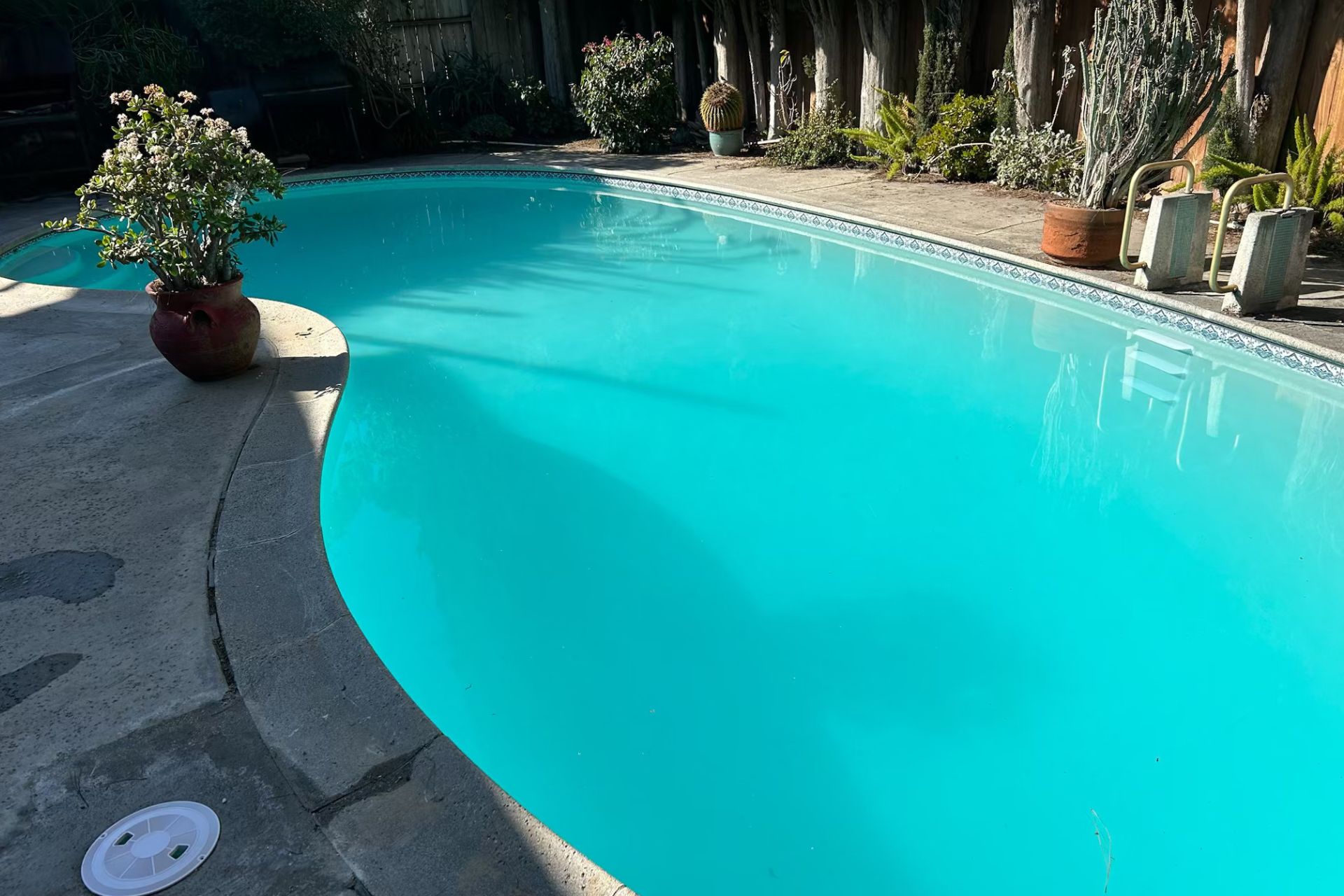
Sometimes the pool is still doing just fine.
The water looks good.
The equipment is working.
The surface is not giving you any real trouble.
But every time you walk past the pool, your eyes go straight to the edge.
There is a tile that keeps coming loose near the steps.
The grout looks tired.
A crack in the coping has been there long enough that everyone knows exactly where it is.
Maybe the tile color made sense years ago, but now the patio has been updated and the pool suddenly looks like it belongs to a different backyard.
None of that necessarily means the entire pool needs remodeling.
Sometimes the edge is simply ready for some attention.
Triton Pools & Spas helps homeowners with pool tile and coping in Sylmar, CA.
We look at what is worn, what can stay, and whether anything underneath the visible materials needs to be repaired before new tile or coping goes in.
A few well chosen updates can make the pool feel cared for again without changing everything around it.
Style Meets Durability
Tile and coping are easy to think of as finishing touches.
They do much more than that.
The waterline tile runs around the inside edge of the pool where the water meets the wall.
The coping sits along the top, where people grab the edge, sit with their feet in the water, and climb in and out.
Those areas get used constantly.
They deal with sun, pool water, chemicals, wet feet, towels, toys, and chairs being dragged around nearby.
Eventually, things start showing their age.
The grout wears down.
Colors fade.
A crack appears.
One tile loosens.
Then another one does a few months later.
Sometimes that is simply normal wear.
Other times, repeated cracking or movement can mean there is something going on underneath.
That is why we look at the whole pool edge before covering it with something new.
Our Pool Tile and Coping services include:
Waterline Tile
Waterline tile creates the border around the inside of the pool.
It is one of those details you see every single time you look at the water.
After years of sun, minerals, pool chemicals, and regular use, it can lose some of its original color.
Grout may begin disappearing.
A few pieces may crack or feel loose.
Replacing the waterline tile can make the pool look noticeably fresher without touching the shape or layout.
The pool is still the same pool.
It just stops looking worn around the edges.
For some Sylmar homeowners, that is enough of an update.
Glass Tile
Glass tile catches light in a way other materials do not.
It can add a little movement and color around the waterline, especially when the sun hits the pool during the day.
Some homeowners like softer colors that almost disappear into the water.
Others want deeper blues, greens, or mixed pieces that stand out more.
Glass can also be used in smaller areas, such as a spa spillway or raised wall, instead of wrapping the entire pool.
It really depends on how noticeable you want the tile to be.
Sometimes a little shine is enough.
Porcelain Tile
Porcelain gives you a lot of choices without making the decision too complicated.
There are simple colors, patterns, textured looks, and options that resemble stone.
Some homeowners want the tile to be one of the first things people notice.
Others want it to sit quietly between the water and the coping.
Porcelain can work either way.
It is often a good choice when you want the pool to feel updated but not overly designed.
Natural Stone Tile
Natural stone never looks completely uniform.
One piece may be a little warmer.
Another may have more texture or variation.
That is part of what people like about it.
It can help the pool feel more connected to a backyard that already has stone, trees, planting areas, or other natural materials.
Not every type of stone belongs at the waterline, though.
Pool water and chemicals can be hard on certain materials.
We help compare the look with the care and durability required before a final choice is made.
Travertine Coping
Travertine has a softer, warmer look that works well in a lot of backyards.
It comes in different tones and edge styles, so it can be coordinated with the deck, tile, and pool finish.
People also tend to notice how coping feels.
You may sit on it.
The kids grab it when climbing out.
Bare feet land on it all summer.
Travertine can give the pool a comfortable, finished edge without making the whole area look brand new in a way that feels out of place.
Precast Coping
Precast coping gives the pool a neat, consistent edge.
The pieces are made in regular shapes and sizes, which can help everything look clean once installed.
There are different profiles available.
Some are rounded and more traditional.
Others have straighter lines and a simpler look.
It can work well with a wide range of tile, decking, and pool styles, which makes it a practical option for many existing pools.
Pour in Place Coping
Pour in place coping is formed directly around the pool.
That can be useful when the pool has curves, unusual corners, or dimensions that do not line up easily with individual coping pieces.
It can also make the transition from the pool edge to a concrete deck feel more continuous.
The look is usually simple.
For homeowners who do not want the coping to become a major design feature, that can be exactly what they are after.
Bond Beam Repairs
The bond beam sits underneath the tile and coping.
You normally do not see it.
You usually notice it when something above it keeps going wrong.
Maybe the same coping section cracks again.
Tile keeps loosening in one area.
There is movement along the edge that does not seem to stop after a simple repair.
Putting fresh tile over a problem underneath does not solve much.
If the bond beam needs attention, we handle that first so the new materials are sitting on a solid base.
The best tile is the one that works with everything around it.
Glass may be a good fit if you want more color and reflection.
Porcelain may make more sense if you prefer something cleaner and simpler.
Natural stone can work nicely when the yard already has warmer colors, stonework, or more established landscaping.
We like to look at the tile beside the coping, deck, pool finish, and even the exterior of the house.
That usually tells you more than holding one small sample in your hand.
Something can look great by itself and still feel wrong once it is next to everything else.
It depends on how much is being replaced and what we find underneath.
If the existing materials come off cleanly and the pool edge is in good condition, the project can move more quickly.
If there are bond beam repairs, damaged sections, or other areas that need to be corrected first, that adds time.
The size and shape of the pool matter too.
Once we have looked at the pool in person, we can give you a better idea of what the schedule may look like.
Yes, in many cases.
If the pool surface, coping, deck, and equipment are still in good condition, replacing only the waterline tile may be all you need.
That can be a nice option when the tile is faded, cracked, loose, or simply no longer fits the rest of the backyard.
We still inspect the edge first.
If the tile is coming loose because of movement underneath, that issue needs to be handled before new material goes on.
The bond beam is part of the upper structure of the pool beneath the tile and coping.
When it is damaged, you may see repeated cracks, loose coping, or tile separating from the edge.
Sometimes what looks like a tile problem is actually coming from underneath.
Bond beam repair means addressing that damaged area first.
There is not much value in installing new tile and coping if the same movement is going to crack them again.
Why Upgrade Your Pool Tile & Coping?
Most homeowners are not changing tile and coping because they want an entirely different pool.
Usually, they have just been looking at the same few problems for too long.
The chipped tile near the spa.
The cracked coping beside the steps.
The rough edge nobody likes sitting on.
The color that somehow makes the pool look older than the rest of the yard.
New tile and coping can help:
- Make the pool look cleaner and more current
- Replace cracked, loose, or faded materials
- Create a more comfortable edge around the water
- Repair damage beneath the visible surface
- Protect the upper structure of the pool
- Coordinate the pool with updated decking or landscaping
- Make the entire pool area feel more finished
overview
We usually start with whatever keeps catching your eye.
You may point to the same loose tile you have pressed back into place more than once.
Maybe there is one coping crack everyone steps over.
Or maybe nothing is technically broken.
You are simply tired of the color.
We walk around the pool with you and look at both the visible materials and what may be happening underneath.
Sometimes the old tile and coping have simply reached the end of their useful life.
Sometimes there is a repair that needs to happen first.
Once we know what we are working with, we help you compare materials that make sense for your Sylmar backyard.
That could be a simple porcelain tile with precast coping.
It could be glass that catches the light.
Maybe you prefer the warmer feel of travertine or natural stone.
After the materials are chosen, the old pieces are removed, needed repairs are completed, and the new tile and coping are installed.
The pool does not need to look completely different afterward.
It just needs to stop looking like the edge has been waiting years for somebody to deal with it.