
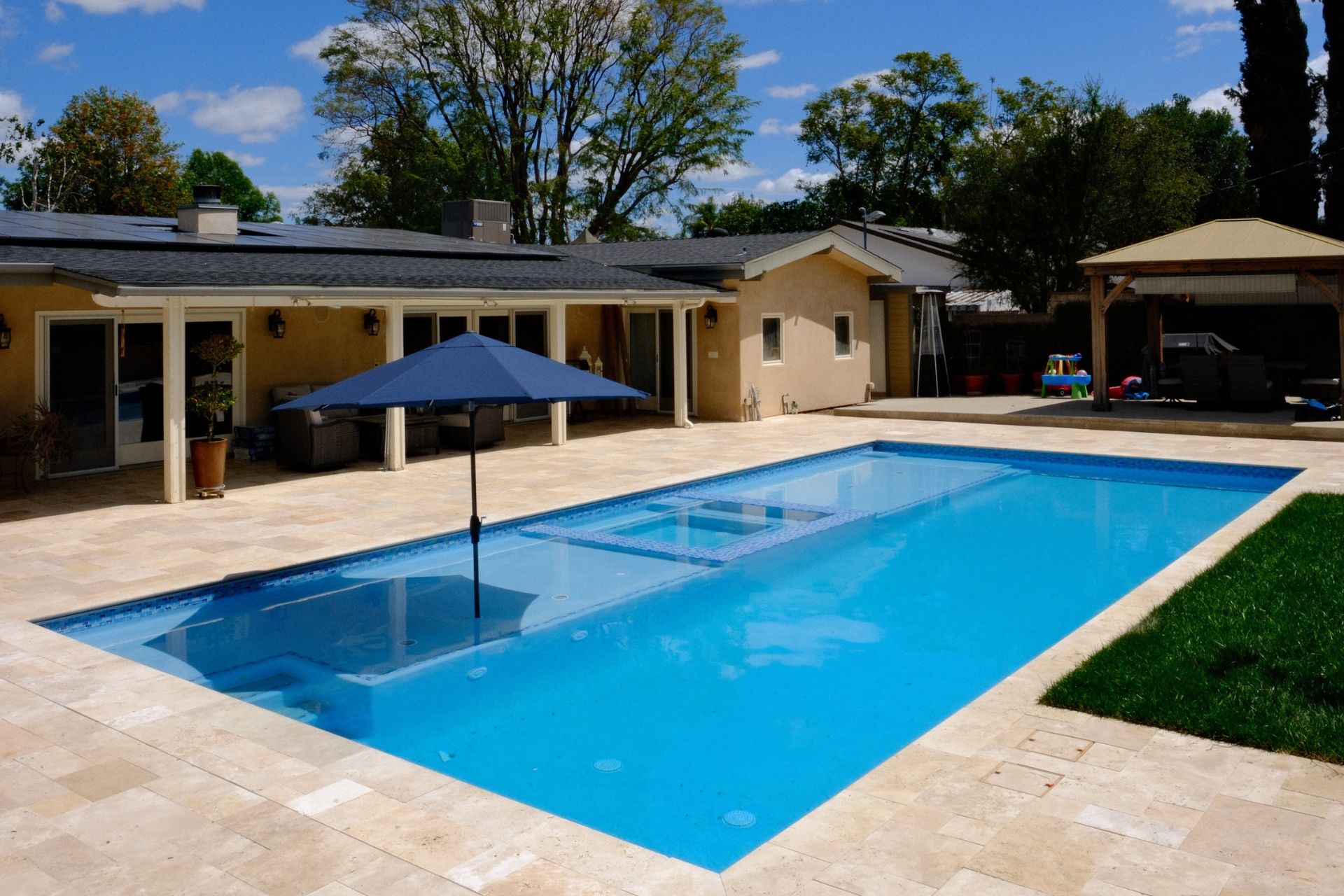
A worn pool surface usually does not announce itself all at once.
It starts small.
Maybe there is one spot near the steps that feels rough when you walk across it.
A few months later, you notice the shallow end looks a little patchy. There is a stain that keeps coming back. The bottom does not feel quite as smooth as you remember.
The pool still works.
The water is clear. The equipment comes on. Nobody has stopped swimming.
But you notice the surface every time you get in.
That is usually when resurfacing starts to come up.
At Triton Pools & Spas, we help homeowners with pool resurfacing in Sylmar, CA.
We look at the existing finish, talk about what you have been noticing, and help you compare options for replacing it.
Sometimes the rest of the pool is still in great shape.
You like the size.
You like the layout.
You do not need a completely different backyard.
The inside of the pool just needs some attention.
Restore the Pool You Already Have
Most homeowners looking into resurfacing are not trying to start over.
They already like their pool.
It is still where the kids spend half the afternoon. It is still where everybody ends up when friends come over. The shape works, and there is no reason to change it.
The surface is the part that has become hard to ignore.
Maybe nobody likes sitting on the steps anymore because they feel rough.
Maybe the plaster looks dull even right after the pool has been cleaned.
Or maybe the rest of the backyard has been updated over the years, and now the inside of the pool is the one thing that looks left behind.
A new finish can change quite a bit without changing the pool itself.
The floor can feel better under bare feet.
The water can look brighter.
And suddenly, the pool does not look tired every time you walk past it.
Sometimes that is all it needs.
Our Pool Resurfacing Options Include
PlasterScapes Plaster Finishes
Plaster is a familiar choice for a reason.
It gives the pool a simple, clean interior without a lot of texture.
Some homeowners want a lighter finish that keeps the water looking bright. Others prefer something a little deeper.
There are different shades to choose from, but the overall look stays fairly classic.
For an older pool that does not need anything complicated, fresh plaster can make the inside feel clean again without trying too hard.
Finest Finish Quartz Finishes
Quartz adds a little more going on beneath the water.
The surface still feels comfortable, but the aggregate gives it more color and depth than basic plaster.
Sunlight can change the way the finish looks during the day too.
Some homeowners like that because the pool does not look completely flat or uniform.
Quartz can be a nice middle ground when you want more character but are not sure you want the stronger feel of a pebble surface.
StoneScapes Mini Pebble Finishes
Mini pebble has a more natural look.
The smaller stones give the surface some texture and variation without feeling as pronounced as a larger pebble finish.
It can work especially well when the backyard already has stone, warmer materials, mature landscaping, or a less formal look.
The color blend matters quite a bit.
One finish may make the water look bright blue.
Another can give it a deeper, quieter color.
That is why we like to look at the finish alongside the rest of the pool instead of choosing from a sample by itself.
Pebble Finishes
Pebble finishes have more noticeable texture.
Some homeowners love that.
Others prefer something smoother.
They can work nicely with waterfalls, stone coping, or a backyard that already has more natural materials around the pool.
The important thing is knowing what you are choosing.
A finish may look great in a photograph, but you are also going to walk across it barefoot and sit on the steps.
We talk about both the look and the feel before you decide.
Specialty Interior Finishes
Sometimes homeowners want something a little different from the standard choices.
Specialty finishes can include unusual color blends, decorative aggregate, reflective details, or other touches that change how the pool looks under the water.
These options can make sense when resurfacing is part of a larger update.
If new tile, coping, decking, or other backyard improvements are already being planned, the finish can be chosen with those materials in mind instead of treating it as a separate decision.
Trusted NPT Pool Finishes
A small finish sample can be deceiving.
You are looking at a few inches of material under indoor lighting.
Your pool is going to have thousands of gallons of water over that finish, with sunlight moving across it throughout the day.
The tile matters.
The coping matters.
Even the color of the patio and landscaping around the water can change how everything feels.
That is why we look at NPT finish options as part of the whole pool instead of picking a color in isolation.
StoneScapes
StoneScapes is a mini pebble option available in several color blends.
It is often chosen by homeowners who want more texture and depth than plaster but still want the surface to feel comfortable for regular swimming.
The smaller aggregate creates a natural look without making the finish feel overly heavy.
QuartzScapes
QuartzScapes uses quartz aggregate to add more color and visual detail to the pool surface.
It stays relatively smooth while giving the water more depth than traditional plaster.
For homeowners who want something between simple plaster and a more textured pebble finish, it can be worth considering.
We always recommend looking beyond the sample.
What matters is how the finish looks underwater beside your actual tile, coping, deck, landscaping, and Sylmar sunlight.
Usually, the pool starts giving you clues.
The steps feel rough.
The finish has faded.
Stains keep returning even after cleaning.
You may notice small chips, pitting, flaking, or areas that look more worn than the rest.
That does not mean every little mark requires a complete resurfacing job.
One rough spot may be something smaller.
We look at the condition of the entire surface before deciding whether resurfacing actually makes sense.
It depends on the pool and what we find once the work begins.
The pool needs to be drained, the existing surface prepared, and any problem areas taken care of before the new finish goes on.
After the new surface is applied, the pool is refilled and goes through its startup process.
A straightforward project will move differently from one where the old surface needs more repair.
Once we look at the pool, we can give you a clearer idea of the timing.
There is not one finish that is right for everybody.
Some homeowners want the smoother feel of plaster.
Some like quartz because it adds a little more color and detail.
Others prefer the more natural look of mini pebble or pebble.
The best choice depends on how you want the pool to feel underfoot, what you want the water to look like, and how the finish works with the rest of the backyard.
We help you compare those things before making the final choice.
That depends on the material, the installation, the water chemistry, and how the pool is cared for.
Keeping the water balanced matters more than many homeowners realize.
A good finish can still wear sooner when the chemistry stays out of balance for long periods.
We explain what the new surface needs during startup and what regular care can help protect it afterward.
Yes.
In fact, resurfacing can be a convenient time to look at the waterline tile because the pool is already being worked on.
If the tile is faded, cracked, stained, or coming loose, replacing it at the same time can make the finished pool feel much more complete.
Sometimes homeowners choose a beautiful new interior finish and then realize how old the existing tile looks beside it.
It is worth looking at both before the project begins.
Not quite.
Resurfacing is focused on replacing the interior finish.
A remodel can involve much more.
That may include tile, coping, decking, plumbing, equipment, lighting, a spa addition, or even changes to portions of the pool itself.
Some pools really do only need resurfacing.
Others have several older areas that make sense to address while the pool is already being worked on.
Signs Your Pool May Need Resurfacing
Pool surfaces tend to wear slowly.
That is why people sometimes get used to the changes.
You may be ready to consider resurfacing if:
- The floor or steps feel rough on bare feet
- Stains remain even after cleaning
- The finish looks faded, blotchy, or uneven
- Small chips or worn areas are beginning to appear
- The plaster is pitting or flaking
- The inside of the pool looks older than the rest of the backyard
- Sitting or walking on the surface is no longer comfortable
- The water looks dull even when it is clean
One rough spot does not automatically mean the entire pool needs a new finish.
We start by looking at what is actually happening.
Then we can talk about whether resurfacing makes sense or whether a smaller repair may be enough.
Pool Resurfacing Around Sylmar
Pools in Sylmar spend a lot of time sitting under the sun.
Then there is the water, chlorine, regular use, and years of people walking across the same steps and sitting along the same areas.
Eventually, the interior starts showing its age.
Some older pools still have original plaster with a few repairs scattered around.
Others were resurfaced years ago and are simply reaching the point where the finish is getting rough again.
The backyard around the pool matters too.
A simple light plaster finish may look right in one yard.
Another pool may look better with quartz or mini pebble beside stone coping, older trees, or a patio with warmer colors.
We want the finish to look like it belongs in your backyard.
Not just like it looked good on a sample board.
Related Pool Services
A resurfacing project may also be a good time to consider pool tile and coping, pool remodeling, or pool equipment installation and upgrades.
Sometimes the interior surface is really the only thing that needs work.
Other times, once homeowners start looking closely, they realize the old tile has been bothering them too.
Or the pump has gotten noisy.
Handling those things together can sometimes make more sense than draining and disturbing the pool again shortly afterward.
Overview
Most resurfacing projects begin with something you have been ignoring for a while.
The rough step everyone notices.
The stain that comes back no matter what you do.
The patchy area on the floor.
Maybe the water is perfectly clean, but the old finish somehow makes it look dull anyway.
Eventually, you get tired of seeing it.
That is where we start.
We look at the existing surface with you and talk about what has changed.
Then we compare plaster, quartz, mini pebble, pebble, and specialty finish options without making the choice more complicated than it needs to be.
Once you know what feels right for the pool and the backyard, we can move into preparation, repairs, the new finish, refill, and startup.
Some pools need a dramatic change.
Most do not.
Sometimes a fresh interior is enough to remind you why you liked the pool in the first place.